Beyond the Beaker: What Actually Makes MnO₂ a Good Catalyst for Hydrogen Peroxide
Beyond the Beaker: What Actually Makes MnO₂ a Good Catalyst for Hydrogen Peroxide
Blog Article
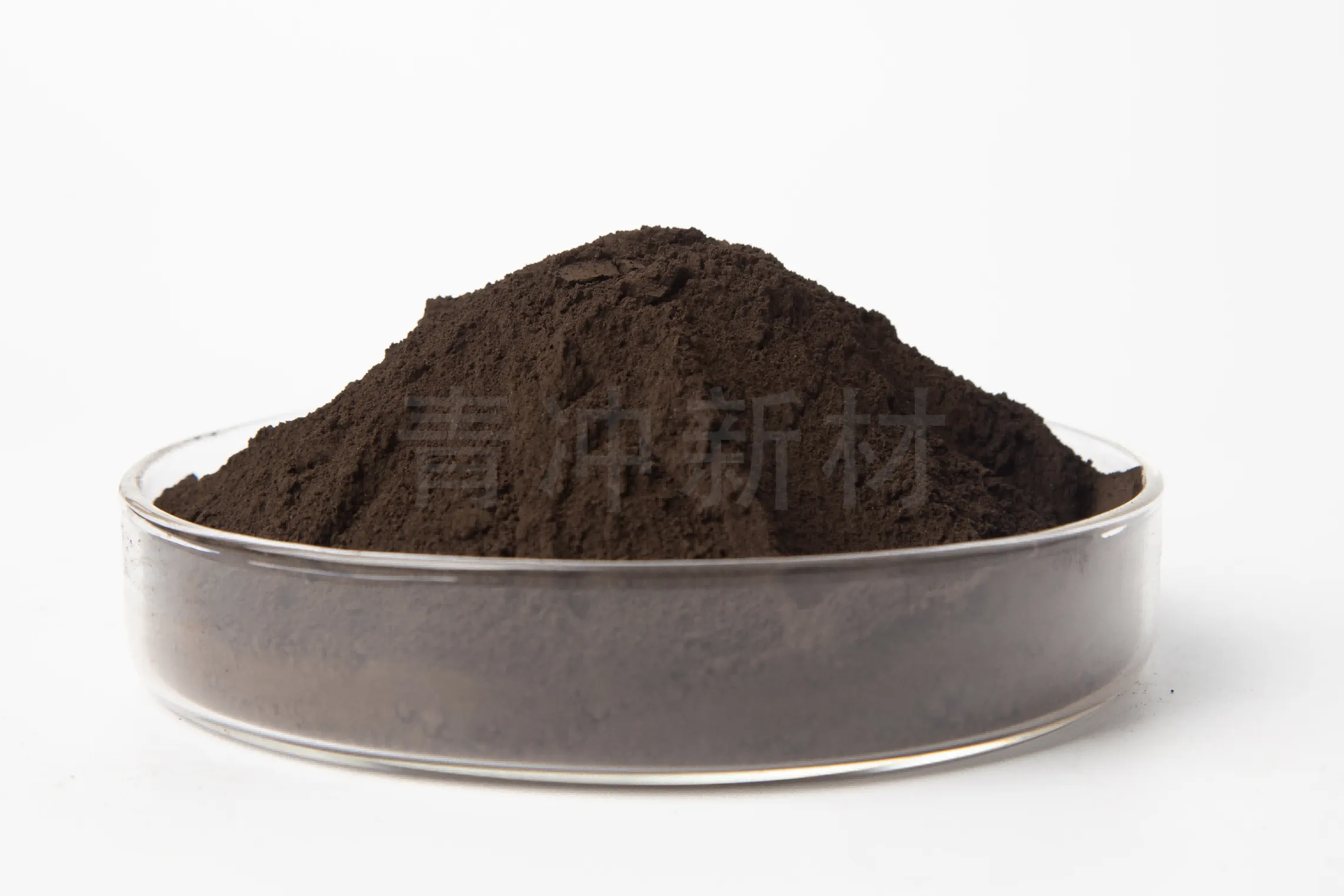
A process-engineering view on activity, accessible surface, and grade choice*
A beaker test tells you nothing useful. You watch a powder darken a peroxide solution, oxygen bubbles rise, and you conclude "this MnO₂ works." It may. It also may be working against you: destroying peroxide you wanted to keep, releasing more heat than your reactor can remove, or shedding manganese into a liquid that downstream equipment cannot tolerate.
After several peroxide-side projects, the question worth asking is not *Is MnO₂ a good catalyst for H₂O₂?* but rather *For which process, under which liquid, at which rate, with which recovery path?* That question is the difference between a chemistry curiosity and a manufactured outcome.
This article is written for process engineers, wastewater specialists, and pilot-plant chemists who need to qualify MnO₂ as a heterogeneous catalyst for peroxide — quenching residual peroxide, generating oxygen, or supporting an oxidation step where peroxide must survive long enough to do useful work.
## Why "good" is process-bound, not material-bound
The idealized decomposition is simple:
> 2 H₂O₂ → 2 H₂O + O₂
But the word "good" lives inside a constraint set. A very active powder can be a poor choice when the process needs peroxide to oxidize a target contaminant: the catalyst consumes the oxidant faster than the reaction it is supposed to support. A slower powder can be the better grade when the binding constraint is residual peroxide management, foam control, or downstream manganese tolerance.
Start the qualification by writing down, in one page, what the catalyst must achieve:
- **Quench leftover peroxide** → high initial rate, easy separation, low manganese in solution.
- **Generate oxygen** → controlled gas evolution, predictable heat release.
- **Support an advanced oxidation step** → moderate rate, minimal peroxide scavenging, no interference with the target reaction.
Each objective produces a different acceptance table. A powder that scores well on one will often fail on another. Treat "high activity" as a testable requirement, not a sales claim.
## The mechanism, in one paragraph
On a wet MnO₂ surface, peroxide species adsorb and exchange electrons with surface manganese through Mn(III)/Mn(IV) and Mn(II)/Mn(III) redox couples. The cycle reduces a fraction of surface Mn(IV) and re-oxidizes it as peroxide becomes water and oxygen. Crystal phase (β-, γ-, δ-MnO₂), defect density, surface hydroxyls, and oxygen vacancies change the rate. pH changes surface charge and manganese speciation. Dissolved ions — iron, copper, carbonate, chloride — shift the pathway.
Two consequences follow:
1. **Same assay, different rate.** A 91% MnO₂ powder can be twice as active as another 91% powder if its phase, defect chemistry, or accessible area is different. MnO₂ assay is a release field, not an activity claim.
2. **The catalyst changes during use.** Under acidic or strongly oxidative conditions, surface passivation, manganese dissolution, or even structural collapse can lower the rate and contaminate the liquid. Always measure dissolved manganese in the spent liquor when product purity or downstream equipment matters.
## Accessible area beats BET area
Higher BET surface area usually means more potential sites — when pores are open to the liquid and the powder disperses well. Fine particles shorten diffusion distances and increase contact. So far, intuitive.
But surface area can mislead in three ways:
- **Blocked micropores.** A high-BET powder with closed micropores may expose fewer usable sites than a lower-BET material with accessible mesopores.
- **Agglomeration and wetting.** A hydrophobic, agglomerated powder never realizes its measured area in water.
- **Process penalty.** Very fine powders raise dust, filtration load, pressure drop, and the risk of an uncontrolled oxygen pulse.
When comparing grades, request BET area **with pore-size distribution**, particle-size distribution, morphology, phase information, moisture, and a standard peroxide activity test at the process pH. Normalize the activity per gram — and, where the area data is reliable, per square meter. The two numbers separate purchasing productivity from intrinsic surface performance, and they let you tell apart a powder with more surface from a powder that uses its surface well.
## The variables that change the observed rate
The grade is one input among many. Control the following when comparing suppliers or scaling:
- **pH.** Surface charge, manganese speciation, and dissolution all shift with pH. A grade that is active in neutral water may behave very differently in an alkaline cleaning liquor or an acidic waste stream.
- **Temperature.** Heating accelerates decomposition, but decomposition also releases heat. A large peroxide charge creates a faster, hotter cycle than a small beaker test suggests.
- **Peroxide concentration.** Higher concentration changes adsorption, gas evolution, and heat removal. Never compare grades at different starting concentrations.
- **Catalyst dose and particle size.** More mass usually raises rate; finer particles improve contact but complicate recovery.
- **Mixing and mass transfer.** Oxygen bubbles can shield active sites. Hold agitation, liquid depth, and gas removal consistent across runs.
- **Impurities and leaching.** Iron, copper, soluble salts, and dissolved manganese alter the peroxide pathway. Track the liquid, not just the starting powder.
If the variable is not in your lab notebook, it is not controlled.
## Which MnO₂ family fits which duty
Start with function, not with the label on the bag.
| Family | When it may fit | Data to verify before any pilot |
| ---------------------------- | -------------------------------------------------------------------------------------------------- | --------------------------------------------------------------------------------- |
| Activated MnO₂ (ACMD) | High surface reactivity, fast peroxide response, adsorption-driven duty | BET + pore accessibility, phase, moisture, leachable Mn, rate at the operating pH |
| Chemical MnO₂ (CMD) | Controlled chemical oxidation, impurity control, defined particle size | MnO₂ assay, Fe/Cu limits, PSD, pH, moisture, normalized initial rate |
| Electrolytic MnO₂ (EMD) | Processes that value controlled structure or electrochemistry; sometimes used in catalytic systems | Phase, surface area, PSD, impurity profile, peroxide-specific activity |
| Natural or filter-media MnO₂ | Low-cost, coarse-media routes after a feasibility check | Mineralogy, BET, granule breakage, contaminants, leaching, recovery behavior |
None of these is universal. The right choice is the one whose measured activity, accessible area, leaching behavior, and recovery cost match your operating window.
## A screening test that survives comparison
A beaker will not protect you from a bad purchase. Use a small, controlled screen:
1. **Hold the conditions constant.** Starting H₂O₂ concentration, liquid volume, pH, temperature, agitation, catalyst dry mass, particle-size fraction, addition sequence.
2. **Measure what the process cares about.** Initial rate, time to a defined peroxide residual, oxygen evolution, temperature rise, dissolved manganese. Report rate per gram and the concentration-time curve.
3. **Run a blank every time.** Peroxide changes with light, temperature, container surface, and contamination. A blank shows the non-catalytic background.
4. **Test the delivered form.** Do not qualify a hand-ground laboratory portion if the commercial product will be packed, transported, and dosed differently. Record package condition, opening date, humidity exposure, and storage time.
5. **Recover and re-test.** Activity loss, particle breakage, surface-area change, and manganese leaching on recovered material matter when the catalyst will be reused. When recovery is uneconomic, include filtration, sludge, and replacement costs in the grade decision.
A supplier should be able to back the data with a recent COA, a TDS, an SDS, BET + pore distribution, PSD, phase, and a peroxide activity curve at stated pH and temperature. Anything read more less is a sales sheet, not qualification evidence.
## Safety and process fit
Peroxide decomposition releases oxygen and heat. In a closed vessel, rapid gas generation can pressurize the system; in an open tank, foaming and aerosols disrupt level control. Use compatible equipment, venting, temperature monitoring, controlled catalyst addition, and a written process-safety isolation plan. Keep catalyst and peroxide separated from contamination sources that can trigger uncontrolled decomposition.
The best process rate is not always the highest rate. For peroxide quenching, a rapid and recoverable catalyst is valuable. For pollutant oxidation or synthesis, a staged addition or a lower-activity grade preserves peroxide long enough to reach the target reaction. Confirm residual peroxide and product quality together, and never optimize one while ignoring the other.
## A note on supplier claims
Suppliers publish typical values, ranges, and grade descriptions. None of those is a binding acceptance limit unless the certificate of analysis for the lot you receive shows the same number, by the same method, on the same lot. Treat sales sheets as starting points for a qualification brief — not as a guarantee of process performance.
A complete supplier qualification request therefore includes: chemical identity, production route, phase, assay, moisture, pH, impurity limits; BET area, pore distribution, PSD, morphology, bulk density, handling information; a recent COA with methods and lot definition; peroxide activity at your stated pH, temperature, concentration, catalyst dose, and endpoint; dissolved-manganese data, reuse results, packaging, storage conditions, and a written change-control practice.
For a public overview of how MnO₂ families are categorized for peroxide chemistry and other industrial uses, the [QingChong manganese dioxide product range](https://hnqcmy.com/product/Manganese-Dioxide) is a reasonable starting point. To turn the brief into a sample program, [contact QingChong's technical team](https://hnqcmy.com/contact-us) with your liquid composition and operating window.
## FAQs
**Does MnO₂ catalyze H₂O₂ decomposition?**
Yes. Solid MnO₂ accelerates the conversion of peroxide to water and oxygen through surface adsorption and redox steps. The rate depends on phase, surface accessibility, pH, temperature, peroxide concentration, mixing, and impurities. Treat it as a starting hypothesis and verify it in the actual process liquid.
**Is higher BET surface area always better?**
No. Higher BET can increase potential sites, but blocked pores, poor wetting, agglomeration, or difficult recovery can erase the benefit. Compare accessible area and normalized activity, not BET alone.
**Is activated MnO₂ automatically the best grade?**
No. Activated MnO₂ is a sensible candidate when high reactivity or adsorption matters, but the best grade also needs the right stability, leaching behavior, particle handling, and rate at the operating pH. Confirm the current assay and COA when supplier tables cite different figures.
**Can EMD or CMD replace an activated grade?**
Sometimes. Either may meet the process target if accessible surface, phase, impurities, and peroxide rate match the application. Replacement requires side-by-side testing; MnO₂ percentage alone cannot establish equivalence.
**What is the most useful first test for a new supplier?**
Run a controlled initial-rate test at the plant's pH, temperature, H₂O₂ concentration, catalyst dose, and mixing condition. Add peroxide-residual, oxygen, temperature, and dissolved-manganese measurements so a fast but unsafe or contaminating grade is not selected by rate alone.
---
*About the author: This article is contributed by the technical team at QingChong New Materials, a manufacturer of manganese dioxide grades for catalytic, water-treatment, and battery applications. See the [QingChong product index](https://hnqcmy.com/product/Manganese-Dioxide) for the full grade range and [contact the team](https://hnqcmy.com/contact-us) to discuss sample qualification for your peroxide process.
Report this page